


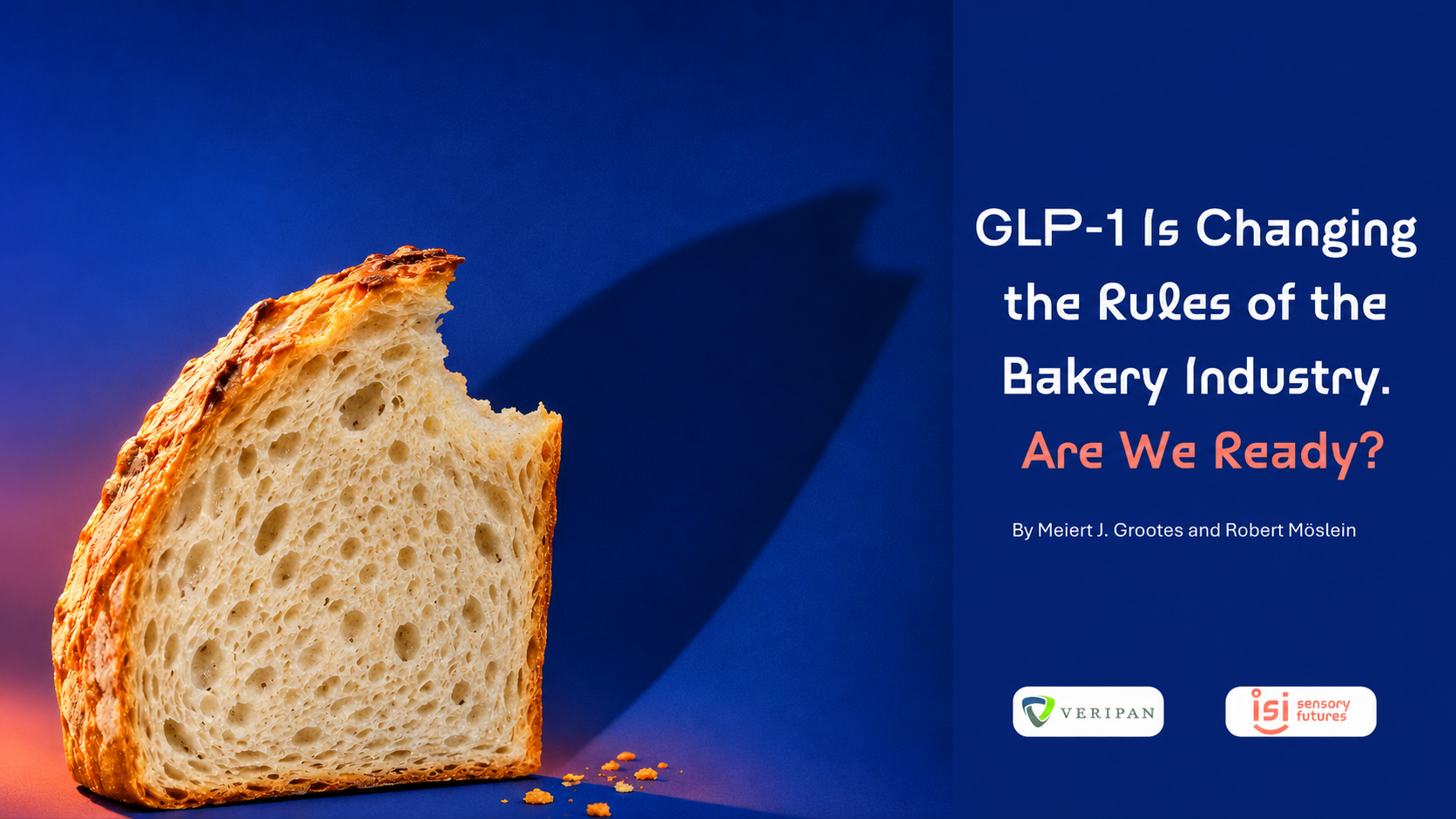
November, 2026 by Meiert J. Grootes and Robert Möslein
The bakery industry may be facing one of its most significant transformations in decades. Yet much of the conversation still revolves around familiar answers: another nutritional claim, a smaller pack, an updated marketing message.
The challenge ahead goes deeper.
GLP-1 medications are changing appetite and food consumption. They also raise a fundamental question for our industry: what makes a product worth choosing when people want to eat less?
For businesses accustomed to growth through greater volume, larger portions and additional eating occasions, that question deserves a place on the management agenda.
Every bite must deliver more
The evidence already extends beyond weight loss. In a randomised crossover study involving 30 adults with obesity, semaglutide reduced hunger and food cravings and lowered preference for high-fat foods. Energy intake across the meals and snacks offered during the assessment was 24% lower than with placebo. This was a specific experimental setting, not a universal prediction of daily consumption. [1]
Changes also appear in purchasing behaviour. Research linking GLP-1 adoption to US household transactions found grocery spending fell by an average of 5.3% within six months in households with at least one user. These findings cannot simply be transferred to European bakery sales, but they give manufacturers a compelling reason to examine their assumptions. [2]
Our conclusion is straightforward: as eating habits change, the nutritional and sensory value of each portion deserves greater attention.
People eating less still need adequate nutrition. They also still want enjoyment, familiar rituals and products they look forward to eating.
The development challenge is to deliver nutritional value in portions people want to choose and enjoy finishing.
A protein claim cannot carry the product
“High protein”, “high fibre” and “reduced sugar” can communicate useful product attributes. But a label cannot compensate for a disappointing eating experience.
A bread with more protein has to remain good bread. A fibre-rich pizza needs a crust people enjoy. A smaller bakery snack must offer a convincing reason to choose it.
This requires manufacturers to rethink the relationship between nutritional composition, ingredient functionality and sensory quality.
Our proposed innovation brief brings these ambitions together: appropriate protein and fibre content, a meaningful contribution to nutrient intake, and an outstanding eating experience.
The balance will differ by product and occasion. A small breakfast bread has a different job from an afternoon pastry or a convenient evening meal. There is no single formulation that answers every GLP-1-related need.
Fermentation can help turn ambition into product quality
This is where food technology becomes decisive.
Changing protein and fibre ingredients can affect dough handling, water absorption and crumb structure. Ingredients with attractive nutritional properties may introduce processing difficulties or compromise the eating experience. Research on wheat bran illustrates both the challenge and the potential of bioprocessing to address it. [3]
We see fermentation as an important development tool.
Controlled fermentation can help transform challenging raw materials into more useful bakery ingredients. In a study of fermented wheat bran, selected treatments improved bread volume and crumb softness compared with their unfermented counterparts. [3]
That matters because nutritional ambition has to survive the journey from ingredient specification to finished product.
Wheat bran, cereal fractions and legumes offer development opportunities. The task is to understand how suitable microorganisms and process conditions can improve their contribution to a particular formulation.
Fermentation is not an automatic guarantee of better nutrition, digestibility or consumer acceptance. Its benefits depend on the raw material, process and final product. Those benefits must be demonstrated.
The opportunity is to build a better food matrix, with nutritional and sensory performance designed together.
The consumer must shape the technical brief
Technical feasibility gives innovation a foundation. Understanding real eating experiences gives it direction.
Before deciding what to add to a formulation, we need to understand what people need from the product.
When does it fit into their day? What portion feels right? Which characteristics make it rewarding? Does enjoyment continue through the portion, or does the experience become dry, dense or tiring?
These are questions to investigate with GLP-1 users, rather than assumptions to build into a product brief.
A pleasant first bite is only the beginning. For bread, the experience also includes crust, crumb and moisture as eating continues. For pizza, it includes the relationship between base, topping and portion. Freshness, storage and handling matter when people consume less at a time.
Consumer research and sensory analysis can identify where an experience succeeds, where friction develops and what should change. That knowledge helps technologists focus their effort on improvements people actually value.
Better products need a shared development agenda
In 2017, food innovation strategist Mike Lee argued in Products, Not Marketing, Are The Future of Big Food that the industry needed to put product quality at the centre of innovation. [4]
GLP-1 makes that argument especially relevant.
Marketing has an essential role in explaining value and setting expectations. The product must then deliver on those expectations.
For VERIPAN and isi, the opportunity lies in connecting fermentation and application expertise with consumer understanding and sensory evidence. Industrial bakeries bring the manufacturing capability and market knowledge needed to turn that work into commercially viable products.
The practical starting point can be focused: one eating occasion, one product question and a small number of prototypes tested with the intended consumers.
That creates a basis for deciding what to improve, what to scale and where further evidence is needed.
Our invitation to the bakery industry ahead of Fi Europe is simple: bring a product question worth solving.
Bread and bakery products can retain a valuable place in changing diets. Earning that place will require investment in products that deliver nutritional value and remain a pleasure to eat.
When appetite shrinks, the reasons to choose your product must become stronger.
References
[1] Blundell, J., et al. (2017). Effects of once-weekly semaglutide on appetite, energy intake, control of eating, food preference and body weight in subjects with obesity. Diabetes, Obesity and Metabolism, 19(9), 1242–1251.
https://doi.org/10.1111/dom.12932
[2] Hristakeva, S., Liaukonytė, J., & Feler, L. (2026; first published online 2025). The No-Hunger Games: How GLP-1 Medication Adoption Is Changing Consumer Food Demand. Journal of Marketing Research.
https://doi.org/10.1177/00222437251412834
[3] Katina, K., et al. (2012). Fermented Wheat Bran as a Functional Ingredient in Baking. Cereal Chemistry, 89(2), 126–134.
https://doi.org/10.1094/CCHEM-08-11-0106
[4] Lee, M. (2017). Products, Not Marketing, Are The Future of Big Food. Food+Tech Connect, 12 January.
https://foodtechconnect.com/2017/01/12/products-not-marketing-are-the-future-of-big-food/